A changing of the guard occurs at intervals in all businesses, but an almost clean sweep of leadership across an entire vertical is rare.
From 2013 to 2015, however, the rapid evolution in media business models, driven by changing technologies, shifts in audience preferences, pressure from results-driven advertisers and, perhaps, commonplace succession events created an unprecedented disruption in editorial direction among consumer travel titles.
Nathan Lump became editor-in-chief of Travel + Leisure last September, a few months after the announcement of predecessor Nancy Novogrod's retirement. And in October, Norie Quintos became acting editor-in-chief of National Geographic Traveler, replacing Keith Bellows at the top of the masthead.
Conde Nast Traveler's chief editor, Pilar Guzman, had only recently been appointed when the 2014 Travel Weekly Consumer Travel Editors Roundtable took place and was unable to attend; she joined us this year.
Adam Sachs, upon taking the helm of food-focused Saveur last October, caught our attention when, simultaneous to his appointment, the brand also began promoting expanded coverage of travel.
Longtime roundtable participant USA Today travel editor Veronica Stoddart's position was eliminated in September, as was Doug Gollan's at Elite Traveler in February. Those brands are absent this year.

Arnie Weissmann, editor in chief, Travel Weekly Photo Credit: Steve Hockstein/Harvard Studio.com
Not all the new faces at the table are participating as a result of personnel changes. Julia Cosgrove, editor of Afar and veteran of three previous roundtables, was on parental leave this year when the roundtable took place, and executive editor Jeremy Saum stood in for her.
All of which leaves last year's rookie, New York Times travel editor Monica Drake, as this year's longest-tenured participant and only returnee.
If you're a perennial reader of these roundtables, you'll find a strikingly different set of personalities this year, with distinctly dissimilar travel styles, attitudes, tastes and ideas about editorial direction than the people they replaced.
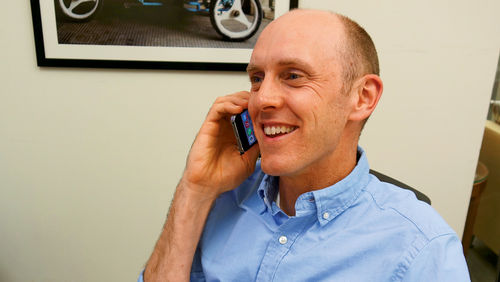
This year's roundtable was held at, and hosted by, Ai Fiori restaurant in Manhattan; Quintos and Saum joined the discussion by phone.
Travel Weekly Editor in Chief Arnie Weissmann moderated.
The original transcript of the discussion has been edited for length, and the chronology has been altered to keep dialogue about specific topics together, though the topic might have recurred in intervals during the course of the conversation.

Pilar Guzman, editor-in-chief, Conde Nast Traveler Photo Credit: Steve Hockstein/Harvard Studio.com
Arnie Weissmann, editor in chief, Travel Weekly: Is what goes on in the travel industry important to you? How closely do you follow it?
Nathan Lump, editor-in-chief, Travel + Leisure: Critical. It's critical. It's the source from which a lot of things come in terms of the stories that we tell. Our teams follow everything that happens really, really closely. It helps us to understand where things are happening, and it helps us keep track of the evolution of places. And of the industry itself, which is huge.
Weissmann: Do you consider yourself to be part of the travel industry?
Lump: In some capacity. We're also journalists, so we're not in it the same way as the president of Crystal Cruises. But yeah, we're part of the fabric of it.
Pilar Guzman, editor-in-chief, Conde Nast Traveler: I think that the travel industry is sort of the great pioneer in some cases, or in most cases. And you really have to pay attention when things are opening, when new routes on cruise lines are being explored. You have to pay attention to those things because they're generally the precursor for the larger booms in those areas.
And also I think you geek out on it, and it does become sort of your daily fix.
Weissmann: Does everyone agree that the industry is pioneering, that it leads travelers? Or does it follow travelers?
Adam Sachs, editor-in-chief, Saveur: Both. I'm a rare writer-turned-editor. As a writer, it was my job to sort of wander and go deep and get lost and tell the story of a place. It didn't matter to me if one place was hot and one place wasn't; it wasn't relevant. Now, of course, as an editor, you need to step back and see the flow of stories a little bit differently.
And I also think that if an industry tanks, and your business is in trouble, too, then you're part of that industry.
Monica Drake, New York Times travel editor: The focus of the Times is on the daily news report, and if we think something in travel is interesting, we'll cover it. If something disastrous happens, if people are stuck on a cruise ship at sea outside of U.S. waters, that's for our international news desk. But the repercussions -- once the ship comes back, what it means for the cruise industry -- becomes a travel story.
Norie Quintos, acting editor-in-chief, National Geographic Traveler: We certainly keep track of what's going on, and I do follow some aspects a little more closely than others, particularly ones that I'm more interested in, like adventure travel and the guided tour business. As for whether we're part of the industry, parts of National Geographic are deeply involved in the industry -- our expeditions, for example.
Jeremy Saum, executive editor, Afar: I've been at Afar since the beginning, and when we started, I don't think the editors initially realized how much we were part of the travel industry. Most of us were just magazine people and had to figure it out. We're not covering as much news as some other folks around the table, so it's not as essential to take the pulse of every little thing that happens. But what's going on, where people are going and what's opening up, it's important for us to know. We're definitely part of it. And we have some influence on it -- everybody here does.
Weissmann: Adam, one reason you're here is that your brand has put a new emphasis on travel. Why?
Sachs: Saveur has always been a magazine about food and travel. It's always been about following food to its source. But one thing we got away from, maybe, is making the travel part actionable. We were very good at going into people's grandmothers' kitchens and bringing back fascinating tales of places and recipes. But what do you do with that as a reader? If you're inspired by this journey, how do you follow in the writer's footsteps? I want to put a little bit more "travel magazine stuff" in and make these stories every bit as dreamy and aspirational, but as food adventures.
Jeremy Saum, executive editor, Afar Photo Credit: Courtesy of Jeremy Saum
Weissmann: Jeremy, I know that you're temporarily standing in for Julia, but otherwise, there has been an amazing sea change at the top of the masthead at many of your publications. It can't be coincidental. Is it a result of secular changes in media business models? The emergence of a new type of traveler? Something else?
Sachs: It's a secret plan we all put together. [Laughter] It's finally come to fruition!
Guzman: I think it's all of the above. I also think at least a couple of the editors had been at it for quite a long time.
Weissmann: So it was, in part, a generational shift?
Guzman: Sure. And it's a complete shift from where print is the crown jewel and digital assets are secondary. It's the primacy of social media and digitally minded editors; they aren't just the afterthought anymore.
And that continues to evolve, and I think all magazine makers are struggling with that to some degree. How do you take the traditional publishing model, turn it on its head and think like entrepreneurs? I think you have to be up for that, and you have to not be as precious as we were groomed to be.
Lump: Yes, the nature of what it is to be an editor today is really quite different than it was. You own a brand, you build a brand, you are a businessperson in addition to being a content creator. To some extent, our bosses are looking for people who can really think that way.
But more than anything else, honestly, I think that it's the length of tenure of our predecessors. One of my bosses said recently that he thinks that the new version of a "good run" for an editor would be seven years. I think that's probably right. Nancy [Novogrod, former Travel + Leisure editor-in-chief] was with the magazine for more than 20 years. I don't think we'll see that again. Things change too quickly, and I think also our brands continue to want fresh thinking. And that's going to be the way it goes.
Weissmann: Pilar, you mentioned the digital thinking and the digital shift, but I think one of the first things you addressed -- and Nathan, you're in the midst of it now -- is relaunching print.
Guzman: Print is the most front-facing, both internally and externally. It's your brand book and sort of sets the tone. By the way, we're doing these things [print and digital] simultaneously.
Yes, the company is shifting its thinking. The print products are still the crown jewels, but the thinking has accelerated. Dramatically.
It's easy to make your statement in print first. It's what you can sort of affect most immediately, for lots of different resources -- I mean, reasons.
[Laughter]
Guzman: Little Freudian slip there.
I can control every last caption that goes in the book if I have to, but there are things you can't control in the digital world that require time and building and sharing of resources.
Still, every superstar blogger I have ever met, they all want a book deal. People still want print.
Drake: I feel like my bosses now want both. They want someone who's really great at print and who is also comfortable telling a story in a digital platform. And that includes social media; that includes building interactives; that includes looking for partnerships. That's the sort of thinking they're looking for, which in the past, at the Times, would have been totally a business-side concern.
And we, on the editorial side, would have just concerned ourselves with telling a beautiful story. Now, it's interesting to assign a story and think, "OK, how is this going to populate a Pinterest board?"
Quintos: We certainly have reorganized ourselves around a digital-first strategy, but that doesn't mean that print is necessarily second.
Guzman: It's one and a half.
[Laughter]

Norie Quintos, acting editor-in-chief, National Geographic Traveler Photo Credit: Tyler Metcalfe
Quintos: We're reorganizing ourselves around our mission, and a lot of the [National Geographic] Society is seen through the lens of travel. There are cross-promotional initiatives. And certainly print is a very important part. It provides what we feel is the cachet, the credibility.
And cash.
I've noticed a sense of a cool factor with print. I've seen hipsters in Brooklyn with their magazines under their arms. So we don't see print as a four-letter word, and we don't see digital as the silver bullet. But they work together strategically. The question is, how exactly do we do that? We're working to integrate our print and digital staffs. We're already sitting next to each other, and we're reimagining everyone's responsibilities.
Lump: I'm fully integrating my staff right now. Everyone works across print and digital. That's the only way that we're going to be able to do what we really need to do, particularly on the digital side. It's not the only possible way to organize things, but for me it feels right in terms of making sure that we're thinking strategically and creatively for the variety of channels that we have at our disposal.
Sachs: What Nathan's saying makes perfect sense to me. It also allows you to make sure you have a unified voice and tone and presence and sophistication. Yes, you're going to do things slightly differently online than you do in print; the two lend themselves to different presentations. But the days of having a magazine that reads one way and a website that sort of undermines that, you can't do that anymore.
I started in October and, very boldly, I came in on my first day and told everyone that there's no more division between Saveur.com and Saveur the print magazine. Everyone nodded, and then we all went back to doing our jobs. It's much easier to say than it is to do.
So, I'm now trying to figure out what that actually looks like, and frankly just sort of compelling people, empowering people, explaining to people, pushing them, dragging them into this brave new world where everyone will contribute across the board.
Weissmann: Jeremy, I remember when Afar started, [co-founders] Greg [Sullivan] and Joe [Diaz] were telling me, prelaunch, that digital wasn't even on their radar. They just wanted to come out with a print magazine. But you have evolved quite a bit since then.
Saum: It's been really interesting, to put it lightly. Because at the beginning we put out the magazine, and we didn't put any of our magazine content online. We invested a lot of time and resources figuring out what our audience wanted in the digital space, and we thought that they didn't necessarily want what we were giving them in the magazine. Our website evolved to be something more like a tool for travelers to share ideas and put together trip plans. All of our digital efforts were headed in that direction. It wasn't a digital storytelling challenge, it was a technological challenge. And probably up until last year, improving that has been our digital project.
It's still a big part, but one of our goals for 2015 is to start using more traditional media tools to get people to our website -- the traditional storytelling and social media -- and using resources we've always had: the magazine content and the work of our editors and a network of people around the world. We're just now getting to the point where we're acting more like a traditional magazine online, where we put our stuff up there and try to make it look nice. Now, if you go to our home page, you can tell we're a magazine. For a while, you couldn't.

Photo Credit: Steve Hockstein/Harvard Studio.com
Weissmann: Last year, we had a fraught conversation about native advertising. [Native advertising is sponsored content that may employ formats formerly reserved for purely editorial purposes.]
Lump: Arnie, how was it fraught?
Weissmann: Monica, you were here. Do you think it would be fair to say that there was a sense of defensiveness, a feeling that editorial content, if not under attack, was being challenged and pushed into places that made the editors uncomfortable?
Drake: Yes, I would say that's a good summary.
Weissmann: I'm wondering how the discussion might be different among this new group of editors.
Lump: I'll jump in. Most of you who know me well know that I used to do this. I stepped out of publishing for a few years and worked in advertising and made content for clients, so I don't have a particularly complicated relationship to this. I'm all for clear labeling, which I think is important. I think it's really important for users to know what's what. But I think, frankly, if brands want to tell some stories -- say, in the ways that we do, rather than making really ugly ads -- I'm all for that.
Guzman: I totally agree.
Lump: Their messages will be more effective and they'll be more successful, and also our users, potentially, will be more entertained. The value exchange is better. So I don't have any problem with it, done right.
Guzman: In theory, 100%. I think the gray area happens when editors become in service to advertisers; that's when it gets problematic. If we're partnering to further a brand message that lives comfortably and naturally within our environment, then kumbaya!, fantastic. It's not some hideous ad, to your point.
But the problem is a matter of degree, and traditional media companies are not really set up in such a way as to account for that gray area. Conde Nast, on the corporate level, just launched a division called Church & State -- well, they changed it to ...
Lump: 23 Stories.
Guzman: Yeah. It was originally called Church & State, which I actually thought was great, and tongue-in-cheek. Some people had some problems with it, but I think, let's just call it what it is. I mean, who are we bullshitting, right?
Sachs: That'd be another good name for it: "Who Are We Bullshitting?"
[Laughter]
Guzman: But I think it's interesting that our head of corporate sales and our artistic content director are holding hands and understanding that this is the reality of our business right now. And as long as we are equal stakeholders, then, in theory, it works. But of course you want to align yourself with the partners with whom you already have a natural affinity. It gets a little gray when you're dealing with advertisers with whom you don't share a sensibility.

Adam Sachs, editor-in-chief, Saveur Photo Credit: Steve Hockstein/Harvard Studio.com
Weissmann: Has that come up?
Guzman: I'm just foreseeing.
Weissmann: I read the press release about 23 Stories, and it said that -- I believe the words were -- "the editorial assets" of Conde Nast were going to be made available to sponsors and advertisers. That brought two questions to mind. First: Is the New Yorker exempt?
Guzman: Nobody's exempt.
Weissmann: And second, how do the editorial staffs feel about it?
Guzman: I think it's -- especially for Conde Nast -- it's huge. We've been very cloistered. I think it's been a shock, and yet you could see it coming for miles. We've been watching this happen, and I think we're no longer in denial. I am less afraid of it, I think, than maybe some others. I think it's an interesting new challenge. We know how challenging it is to create meaningful advertising experiences, and I want to be a part of the solution, not [puts her fingers in her ears]. I think it's really interesting, but I think I may be in the minority.
Weissmann: Among the editorial staff?
Guzman: Yeah.
Sachs: But not at this table. I mean, I think the fact that this isn't a fraught conversation this year tells you what's changed. As you were talking, I was thinking that, yeah, we all feel OK about it. It's like a reverse NIMBYism, where we can handle it in our backyard, but when I hear about it in the Times, or if I heard about it at the New Yorker, I'd get very nervous that these sacred institutions were letting advertisers in. But I think we all feel like we can handle that gray area, because we're looking at it and talking about it, managing it, and it doesn't seem like a terrifying new world.
Weissmann: Monica, I think you were in the fraught camp last year.
Drake: Yeah. So we have a new division now at the Times that's dedicated to nontraditional advertising.
And I think at this time last year, I kind of knew what we were going to do, but I couldn't say. So I was sort of a little quieter about that. But in Travel we've done a bit of native advertising. Our video player now has "36 Hours" videos, and we have [sponsored] Google Maps and cards while the video plays.
So that's something we probably would not have done two years ago, and that involved a lot of complicated negotiations. We have a standards editor on staff, and it involved me and the advertising team, and just the fact that we don't show our material to advertisers ahead of time -- that's a long-standing policy -- one of the questions is, "Well, how is Google going to build this player?" So our solution has been to have a third-party build it, and Google doesn't see the way it looks until it's live on the site.
Guzman: It's a tremendous service to the reader. You can't argue with the functionality.
Sachs: Right, yeah. Nothing wrong with that.
Drake: It was interesting, the response to that in the building, because all of these really veteran journalists from the news sections kept emailing me and saying, "I love your new ad!" I think we're kind of over the hurdle. But, yeah, I think for travel at least, we're thinking of people who can use our information, but not necessarily, "This article is brought to you by Starwood."

Monica Drake, New York Times travel editor Photo Credit: Steve Hockstein/Harvard Studio.com
Quintos: At National Geographic Traveler, I'm finding that the discussions revolve around not whether we do it but more about how to do it appropriately. And in that sense, I think the discomfort of the editors can actually be a good thing, because it can keep us honest. We ask questions, and we certainly try to make sure that we are well within appropriateness. We have a brand that many advertisers want to succeed with, and we have readers who trust us, so how do we pick our partners and how do we create content that will serve our readers and stay on mission? Without our brand and without the trust of our readers, we have nothing to sell.
So when the editors are uncomfortable or ask questions, I see that as a good thing. It doesn't mean we don't do native advertising; it's how we do it that's important. A lot of the programs that we're selling are multiplatform, involving print and digital and social. It's very exciting, actually, to be able to tell stories in very different ways.
Saum: Yeah, and for us I think the lines have actually gotten a little clearer. A couple years ago they were blurrier because we were a smaller team. We've now hired an editor to do this kind of thing, and so it's clearly his job, and our marketing team isn't coming to us editors. Our process has gotten better.
Like everyone else, I think it's a question of degree. They respect where we're coming from, we respect what they're trying to do. It's a conversation, and it's a negotiation every time. But it has gotten clearer for us now that we have a little creative team that does some native stuff.
Guzman: Can I ask you a quick question?
Saum: Yeah.
Guzman: Does the team fall under the business umbrella or the edit umbrella?
Saum: It's part of the marketing department officially. That's the business side more than editing side.
Lump: Which is fairly typical. That's the model that most people are adopting.
Weissmann: It's interesting how different this conversation is this year. You know, over the previous nine roundtables, readers got to know your predecessors partly through their travel preferences. So, as a way of further introducing you to readers, I'd like to ask: What's your idea of a perfect vacation?
Guzman: I like a last-minute trip, without too much anticipation or lead-up. I find that those are often the most satisfying because you don't have the time to form expectations. And you'll always be pleasantly surprised.
Weissmann: You know, there's actually some research on travel and happiness, and researchers concluded that the anticipation of a trip often ends up being the happiest stage.

Arnie Weissmann, editor in chief, Travel Weekly Photo Credit: Steve Hockstein/Harvard Studio.com
Guzman: There's that part of it, too, and I do love the planning stages, but often I do the planning for other writers or editors, planning the ideal trip that may not be mine.
Quintos: A perfect vacation for me involves biking among stunning scenery. And eating. I did a bike trip in Scotland, in the Outer Hebrides, just about a year ago and got completely hooked. For the first time, I really felt this endorphin rush during a vacation, and on my next vacation, I want to include that.
Drake: I'd have to say, any vacation that allows me to sleep in and has childcare built in. My daughter's three-and-a-half.
But I'll just start with the trip that I'm most looking forward to, a ski trip I'm taking next week in Vermont. It'll be the first multigenerational family ski trip for us. I love vacations where my friends and family and I can take part in an activity, and also I get to sleep.
Sachs: I'm with you. My ideas have evolved since I now have a three-and-a-half-year-old and a one-and-a-half-year-old.
My ideal ideal vacation, which hopefully someday I'll get back to, is going somewhere I know that I'm going to have a couple good meals, but I don't know exactly what else I'm getting. I don't like to go somewhere where there's no chance of brilliant food, but I also don't like to do something that's too over-choreographed or too familiar.
People ask if I still get excited about travel, and I always get excited about travel, especially going somewhere new. I like the anticipation. It's like when you're ordering at a restaurant, it's sort of the best part, because nothing has let you down yet.
[Laughter]
Sachs: But for now, yeah, now it would be renting a house in Florida with my parents, and we're near my 102-year-old grandmother. So not quite as sexy as what I used to think of as a dream vacation, but having an hour of time to myself or having a little bit of baby-sitting sounds very, very exciting.
Saum: I came pretty close to the ideal vacation a couple of summers ago in France. A few days in Paris, which has a bike-share program, that's really a fun way to see a city. Then we went and looked at birds in the Camargue; I like to go hiking and bird-watching. And we ended up at a house with friends from college, and all our kids, and had a few days to hang out and play and swim and do crossword puzzles and baby-sit for each other. That trip checked all my favorite travel boxes.

Nathan Lump, editor-in-chief, Travel + Leisure Photo Credit: Steve Hockstein/Harvard Studio.com
Weissmann: To be honest, I'm a little surprised at the tranquil, domestic quality of many of the responses so far. Nathan?
Lump: I'll give you something different. What I really love is stepping as thoroughly as possible out of my world. That can often mean exoticism, but it doesn't have to. Sometimes, just another landscape can feel incredibly different from this urban jungle we live in here. I remember the first time I went to India. There's the incredible sensory nature of traveling in that country, and that's something I really gravitate toward. Later this year, I'll go to East Africa. You couldn't get a more different experience from urban living in New York than being in the bush.
Weissmann: You're all exposed to different destination-marketing campaigns. Was there a destination you felt did a really good job this past year?
Saum: When I was flipping through the dummy of the issue before we sent it to the printer and I got to the ad that Montana ran, of the bison in the snow, I was, like, "I want to go there right now." That stopped me in my tracks.
Quintos: I think they're doing a good job, too. And they tell their story in many different ways. They tell it digitally, they tell it in Google Hangouts, and they've done photo walks and Instagram hashtags. They really have been very innovative.
Lump: There's been some good stuff out of Canada. The Australians continue to do a good job. But there was nothing that blew me away.
Guzman: Charleston did a good job. L.A. also did a whole social campaign that was interesting.
Drake: Was Norwegian the cruise line that advertised during the Super Bowl?
Weissmann: Are you thinking of the Carnival ad? With John Kennedy?
Drake: Was it Carnival?
Weissmann: The branding didn't stick with you?
Drake: I guess it didn't, but that was an ad that people outside of the travel industry were saying, "Hey, did you see this ad?"
Sachs: I had thought somehow I had tuned in the wrong audio channel.
Drake: You were confused with the voice message?
Sachs: Yeah. But no, it was a lovely.
Drake: That was a conversation-starter.
Sachs: It was a bold thing to do.
Drake: It brought to mind the majesty of cruising on the open sea. It was very dreamy and inspirational. I don't think most people think of cruising that way.
Sachs: You're exactly right; people don't. The narrative of cruise advertising isn't using the majesty of the water itself. It's activities, what you do when you get there.
Guzman: It's the waterslide.
Lump: The zip line.
Drake: This was romantic, almost.

Photo Credit: Steve Hockstein/Harvard Studio.com
Weissmann: Where are you planning to go this next year?
Drake: Vermont, Miami, the Bay Area, Southern California. I want to go to Cuba. So does everybody at the Times.
Guzman: So does everybody at this table.
Lump: I've already been to Singapore, Hong Kong, Thailand, San Diego and British Columbia this year, and on the books right now I have British Virgin Islands, Charleston, Istanbul, Kenya, Tanzania, Bahamas, Vegas, France, Morocco, Italy.
I'm sure I'm forgetting somewhere. You know where I'd really like to go that I'm not going to get to? Antarctica. I don't like having a missing continent.
Guzman: I just got back from India. Going to Kenya and Tanzania tomorrow, and shortly thereafter, Paris and Milan. And Morocco. And possibly Jackson Hole.
Quintos: I actually just told our staff that I want them to take all their vacation this year because I've seen the studies about people leaving vacation days unused.
If I can get my ducks all lined up, I'm planning to bike the Dordogne. I have two sons in college, one in northern California, and the other in North Carolina, so of course I have to go see them. And I have some upcoming conferences, in Cape Town and Chile. And a trip at the end of the year to Burma, down the Irrawaddy River.
Saum: I'm lucky. I married a planner, so I already know that we're going to Greece this summer for a couple weeks, and then, later in the summer, we're going to -- coincidentally -- we're going to Montana. We were going to go before I saw the bison ad.
Lump: Don't say that! Don't admit it! They want to hear they convinced you.
Sachs: I'm completely depressed by this conversation and these answers. I used to work for you guys. Now I'm going to Florida to see my grandmother.