Following a tidal wave of upheaval, Wynn Resorts CEO Matt
Maddox kicked off the company's first-quarter earnings call on April 24 with
something of an understatement: "It's definitely been an eventful three
months since we last reported quarterly earnings."
Indeed, the first 90 days of 2018 were a roller coaster for
the luxury integrated resorts company, which saw founder and CEO Steve Wynn
resign his post after a Wall Street Journal investigation turned up allegations
of a pattern of sexual harassment of current and former employees.
In the 60 days since Wynn's departure, long-time executive
Maddox has stepped into the top spot, and he's been busy doing damage control,
shoring up shareholder confidence and stabilizing the internal culture.
Maddox has swiftly moved to wrap up legal battles and
distance the company from its former chief executive. Wynn Resorts settled a
long-running lawsuit with Universal Entertainment Corp. in March for $2.4
billion, paving the way for Steve Wynn to sell his entire stake of 12.1 million
shares later that month. The company also brought on Galaxy Entertainment Group
as an investor, issuing a 4.9% stake in the company for $1 billion.
Jefferies analyst David Katz said the Galaxy investment "sends
a supportive message. Galaxy is a well-thought-of entity globally, not just
within Macau. Having them as a supportive shareholder sends a positive message."
Katz added that he viewed Galaxy's 4.9% stake as a temporary
position that could potentially increase the likelihood of winning pending
approvals in Nevada and Massachusetts.
In Las Vegas, Maddox reported record quarterly room revenue
at the Wynn and stronger bookings year over year.
"What we are feeling and seeing in Las Vegas is
continued strength," he said.
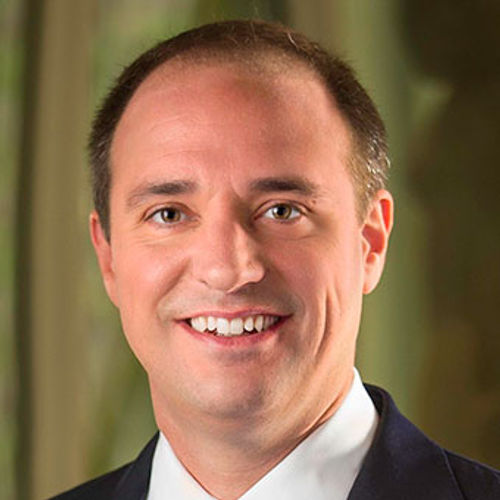
Matt Maddox
Looking to the future, however, Maddox also announced that
he would be reining in Wynn Resorts' aggressive development plans on the Strip,
which include a new convention center facility slated for 2020; the Paradise
Park lagoon project, which would transform the Wynn golf course into a
watersports playground; and the construction of two resort towers, adding
thousands of guestrooms to the company's Las Vegas inventory.
A 1,500-room hotel has been planned alongside the lagoon,
and in December, Wynn purchased the 38-acre Alon site across Las Vegas
Boulevard and announced plans for an additional property dubbed Wynn West.
Maddox called the $3 billion budget for the pair of hotel
projects unsustainable. "We are taking a hard look at what is sustainable
here and what's going to keep attracting our customer," he said,
suggesting the company will go forward with one but not both of the new
integrated resorts.
He also said a review of the meetings project has yielded
$35 million in savings and that he's redirecting the lagoon concept to focus
not on the "mass-market theme park" approach but on creating a luxury
amenity for resort guests.
"I'm a big believer in the future of Las Vegas,"
Maddox said. "We are really fortunate to have a large assembly of prime
Las Vegas land, and the importance of appropriately sequencing that development
cannot be overstated."
Katz sees these adjustments as part of the new CEO stepping
into his new role and asserting his influence.
"I think that Matt is attempting to put his own
signature on the company," he said. "And by that I mean adding some
rigor, some discipline and some focus on the existing projects."
That process has also included prioritizing a $100 million
investment in Wynn Macau, looking into a possible project in Japan and
stripping the Wynn name from the company's $2 billion resort development in
Massachusetts.
In response to reports that Wynn might sell that property to
MGM Resorts, Maddox said that they still "love the market." However,
he emphasized that if "there could be any contagion from Massachusetts
into our $30 billion company in Las Vegas and Macau, we will have to take a
hard look at what is best to protect our shareholders and our value."
The last three months have also involved work on Wynn
Resorts' corporate culture, including implementing parental leave, launching a
department on gender equality and meeting with employees to assure them of the
company's stability and strength.
Amid an "onslaught of negativity from the media,"
Maddox said he's been hosting "town halls," meeting with
approximately 15,000 employees and "talking about the future of the
company and how bright it is and how we're not for sale."
Katz said that distinction might not matter: "I think
that there's two ways that transactions occur: There's companies that put
themselves up for sale, and there's companies that get bought. I classify this
more as the latter. If we sat down and thought about desirability and what entities
would want to pay either for the whole company or its assets on an individual
basis, I think that math exceeds the opportunities for the company to be valued
in its current structure on the earnings it can generate. It's not going to get
the same multiple because it can't grow in the same ways."
Nor is the company's drama quite over, at least not in the
short term. After Wynn added three female board members in April, Steve Wynn's
ex-wife, Elaine Wynn, petitioned shareholders to vote out some remaining
members of the board who are close to her ex-husband at the annual shareholders
meeting on May 16.
"I think we should expect that there might be further
changes to the board," Katz said, adding that for now the company's
positive performance could insulate it from demands for change.
"The numbers are still pretty good," he said. "If
the numbers stop being good, then [investor] activism gains traction."