While the concept of limited-duration pop-up venues within
the hospitality space is nothing new, brands from beyond the travel sphere are
increasingly leveraging pop-up hotels to drive social media buzz.
According to Chuck and Nandi Welch, brand strategy consultants
from Rupture Studio, pop-up accommodations fit well into today’s experiential
travel-driven marketing landscape.
“Brands are having to evolve in the digital age,” said Chuck
Welch. “They have to stay novel and fresh, especially when it comes to
attracting millennials and 20-somethings.”
Likewise, incorporating a hospitality component offers
nontravel brands an inherent advantage when it comes to crafting an effective,
and highly sharable, marketing campaign.
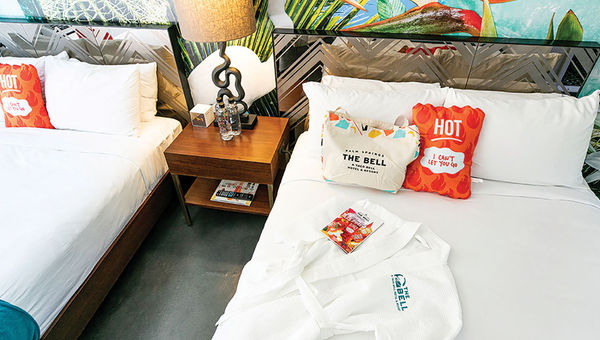
A guestroom at The Bell: A Taco Bell Hotel and Resort.
“People love to share their vacations and travel experiences
that they’re having,” Nandi Welch said. “And that might be tough to break into
if you’re not a brand that plays in those spaces. So a hotel is a way to get
into that vacation conversation and kind of create a whole world around your brand.”
This summer, Taco Bell enjoyed quite a bit of brand-building
success with The Bell: A Taco Bell Hotel and Resort, a themed pop-up property
in Palm Springs, Calif., that was open from Aug. 8 to 12. Rooms at the Bell
sold out two minutes after being released to the public and hosted more than
400 guests during its short run.
The pop-up was hosted at the V Palm Springs hotel, with the
property managed by Taco Bell in collaboration with marketing and public
relations partners United Entertainment Group and Edelman.
Jennifer Arnoldt, Taco Bell’s senior director of retail
engagement and experience, said, “The Bell delivered yet another unconventional
and unexpected way to experience the brand. It was really the small Taco Bell
nods and attention to detail that guests loved the most.”
The Bell’s accommodations and amenities were thoroughly
themed, with everything from bed pillows to room keys to robes featuring
branded design. Guests could get Taco Bell-inspired nail art, fades and braids
at the property’s salon, and on the food and beverage front, rooms were stocked
with Taco Bell chips and cans of Mountain Dew Baja Blast, a flavor of the soft
drink developed for Taco Bell. Guests were able to try yet-to-be-released Taco
Bell culinary creations.
Entertainment included live music, a silent disco and a “dive-in”
movie night, among other events.
“Immersive, shareable and inspiring was at the root of
everything we did at the hotel,” Arnoldt said, adding that “fans Instagrammed
plenty of selfies” during their stays. “We wanted to make sure that these
carefully curated experiences were highly visual, clever and Taco Bell to the
core.”
On the heels of Taco Bell’s viral hotel initiative, the
chocolate-hazelnut spread Nutella similarly made headlines with its Hotella Nutella sweepstakes,
unveiled in November. As part of the weekend getaway pop-up contest, Nutella
fans submitted videos for a chance to win a stay at the Hotella Nutella from
Jan. 10 to 12.
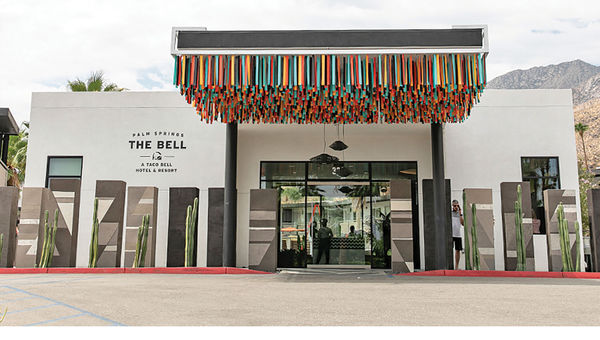
The Bell's exterior in Palm Springs, Calif.
The hotel, which will take over an existing property in
California’s Napa Valley, will be decked out with oversize jars of Nutella and
items inspired by the spread.
In addition to other events, programming will include a
Nutella breakfast with Food Network judge Geoffrey Zakarian and a soul food
brunch with chef, TV personality and restaurateur Tanya Holland.
Todd Midura, vice president of marketing at Ferrero’s
Nutella North America unit said, “Hotella Nutella is our first foray into the
hospitality space, and it has allowed us to be creative with the way we
communicate. In today’s world, traditional advertising and marketing is no
longer enough. Our fans are evolving along with the brands they love, and they
are consistently looking for deeply immersive experiences.”
While the number of guests able to snag a room at a pop-up
like the Bell or the Hotella Nutella remains tiny, the Instagramable campaigns
often enjoy great reach in today’s social media-driven world.
Rupture Studio’s Nandi Welch said, “While you have to
be at the hotel to actually experience it, you can still see it all secondhand
on social media. And it plays perfectly into the Instagram selfie culture and
the notion of human behavior where we all want what we can’t have. So there’s
also a bit of aspiration built into it, and these pop-ups are tapping into
that.”
Meanwhile, the travel and hospitality industries appear to
be taking note of the rabid demand for pop-up hotels. This past fall, for
example, Orbitz partnered with the Kimpton Gray in Chicago to debut a Plant
Hotel pop-up.
Inspired by an Orbitz survey indicating that 63% of
millennial vacationers said the hotel amenity they’d most like to see is more
in-room plants, the Plant Hotel ran from Oct. 18 to 20 and offered
accommodations modeled after popular collections and gardens at Chicago’s
Garfield Park Conservatory.
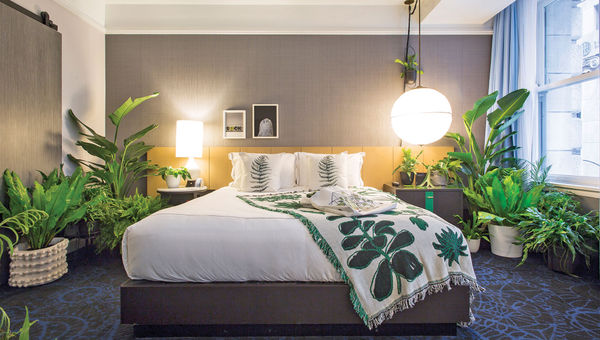
The Fern Room at the Kimpton Gray in Chicago was available as part of Orbitz’s Plant Hotel pop-up in October.
Surrounded by lush greenery, the Plant Hotel guests were
also offered a “botanically inspired relaxation kit” with a bathrobe, sleep
mask and socks, green juice and other items.
According to Carey Malloy, director of brand marketing at
Orbitz, the pop-up, which was a first for the brand, was a runaway success.
“The response we received from guests was overwhelmingly
positive,” Malloy said. “And another reason that we gravitated toward doing a
pop-up is because we know that the media likes to cover them. From a marketing
perspective, it’s a great way for us to really think about our content strategy
and leverage all of our paid, owned and earned channels.”
According to Orbitz, the Plant Hotel campaign received 138
million impressions across the brand’s channels and generated an 85% increase
in engagement on Facebook and Instagram. Given the payoff, Malloy said Orbitz
would “love to do another pop-up.”
“Lots of brands are kind of hopping on the pop-up bandwagon,
but it’s a much smaller number that are creating experiences that are authentic
and true to who they are,” she said. “But as long as a brand understands their
customer, I think hotels are a great way to bring what their brand stands for
to life.”