SAN JUAN -- Saturday evening
was lively in Old San Juan.
Restaurants in its narrow
alleys were packed with locals listening to salsa. The main square was a mix of
tourists and families. The silhouettes of dozens of kites against the sunset
flew over the lawn in front of El Morro, San Juan's famous fort.
On the beach, the upscale
Vanderbilt Condado hotel was hosting a holiday party, its second in as many
nights, and people stayed at Isla Verde's beach late into the afternoon.
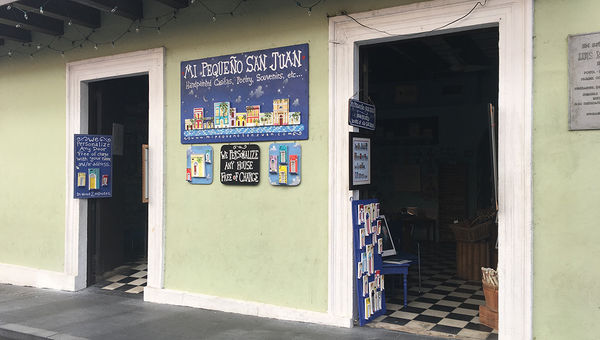
Mi Pequeno San Juan in the Old City has no power and can only accept cash. Photo Credit: Johanna Jainchill
To people who know San Juan,
this will seem like a normal weekend. But the Puerto Rico that was devastated
by Hurricane Maria in September is far from normal. The island is coming back
slowly and, in many cases, painfully. Only 65% of the island has power restored
and many residents have left in a mass exodus to the mainland United
States.
For the average tourist,
however, visiting Puerto Rico will feel familiar. There are clear signs of
Maria's destruction: many traffic lights still don't work, detritus still lines
some roadsides, there are many damaged buildings.
Conversations with smiling
restaurant workers reveal that their homes have no electricity or WiFi, almost
80 days after the storm passed. Some stores have reopened without power and
accept only cash. Personnel from FEMA and Con Edison and other recovery workers
are working on power lines and spending evenings at bars and restaurants.
Old City hotels like
El Convento and the boutique Villa Herencia, where I stayed, are open and have
no signs of damage. There are plenty of places to eat and souvenirs to buy. The
beaches are mostly cleaned up and the water quality is back to normal. Some of
the largest hotels are still closed, especially those on San Juan's beach, like
Hilton's El San Juan, the Ritz Carlton and the Marriott. But more than 100
hotels are open and taking reservations.
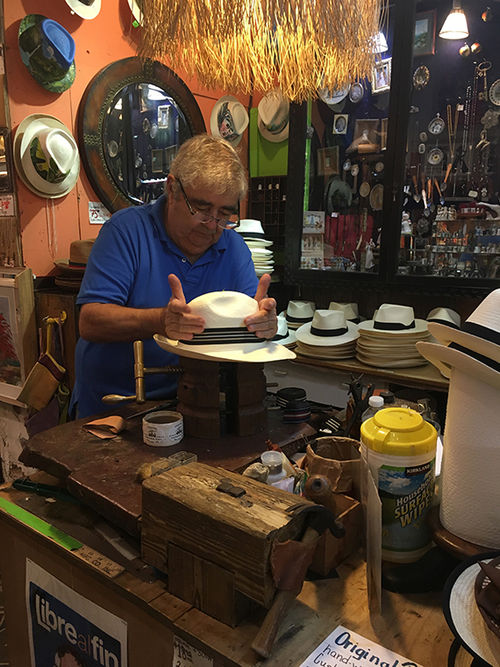
Guillermo Cristian Jeffs, owner of Ole Curiosidades, a maker of customized Panama hats. Photo Credit: Johanna Jainchill
How San Juan got to this
point, in spite of what most people say was a slow government response, for
many reasons, is a testament to the resiliency of the Puerto Ricans and desire
to move forward.
Every store in the Old City has a story: Without power, the
Casa Cortes chocolate cafe and restaurant served food from a window two days
after the storm and delivered meals to the community. The El Patio de Ana
restaurant opened with candlelight and bags of ice two weeks after the storm.
Ole Curiosidades, a seller of customized Panama hats, reopened just two days
after Maria struck, working off the sidewalk and sometimes making only $10 per
day, just to have a presence.
Taking matters into their own
hands
That spirit of resiliency was
alive in Aguadilla, where locals, including many that work in tourism, were out
Saturday morning cleaning up Crash Boat Beach, one of western region's nicest
beaches where even now, the water is so clear you can see straight down to the
sandy bottom 20 feet below at the end of the pier.
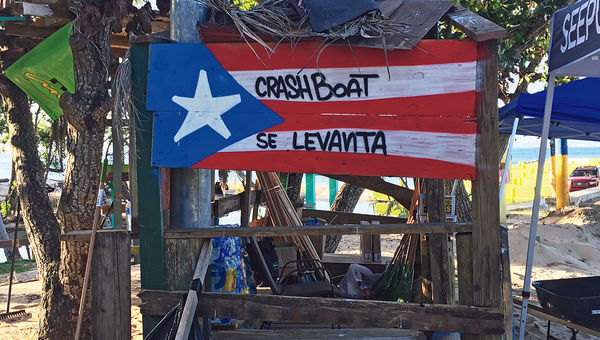
"Se levanta," rise up, is the post-hurricane rallying cry throughout Puerto Rico, including on Crash Boat Beach. Photo Credit: Johanna Jainchill
That pier, a popular spot for
both locals and tourists to jump in the crystal waters, is considerably shorter
than what visitors will remember. Maria knocked about half of it into the sea.
The storm surge also swallowed about 100 feet of the sand, making the strip of
beach much smaller than it used to be. Until about a week ago, the parking lot
was covered with sand, which the city finally pushed back onto the beach to
give food trucks and tour operators a place to set up shop.
Locals say there is still far
less vegetation around, and many fewer palm trees, but it's still a beautiful
beach. On Saturday afternoon, with the parking attendant on duty for the first
time since the storm, a smattering of paddleboarders, scuba divers, and beach
loungers came to enjoy the beach's reopening. It was also the first weekend
since Maria that the food trucks were there, selling fresh coconut water,
pizza, pina coladas and daiquiris.
Crash Boat's iconic fish
market, which fisherman stocked with fresh catches from the colorful yolo
boats, was destroyed, along with its adjacent restaurant and bar. But its
operator pledged to be back up and running in some capacity in the next few
weeks, occupying a building on the beach he had used as an office.
The beach cleanup, which included painting the
pier, picking up trash, and cutting the fallen palm trees, was organized by the
Puerto Rico Tourism Co. (PRTC), which has been helping to get Puerto Rico's
tourism sector back on its feet.
"Getting the beach ready
wasn't the first priority for the government," said Juan Carlos Rosario, owner of
Paradise West Tours, which operates snorkeling tours, fishing charters and boat
cruises, and rents out jet skis from Crash Boat. "The PRTC approached me
and said, 'How can we help?'"
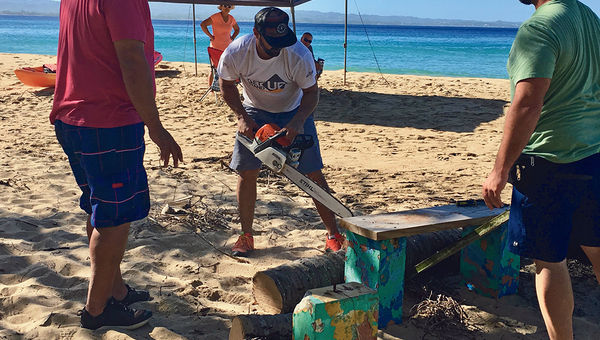
Juan Carlos Rosario, owner of Paradise West Tours, cuts a fallen palm tree during the Crash Boat Beach cleanup. Photo Credit: Johanna Jainchill
Rosario told them they needed
equipment and manpower, and the PRTC helped on both fronts, supplying paint,
tools and volunteers. Even Aguadilla's mayor joined in for a little while.
Until Saturday, Rosario and other locals had been handling most of the cleanup
on their own. "It was a disaster in the beginning," he said.
Rosario would normally be
busy already this season, but he has shifted his focus to helping the region
come back, understanding that without tourists, he can't run tours.
"First, we need to help Puerto Rico get
back on its feet, and when Crash Beach is ready, we'll set up again," he
said.