The binoculars caught my attention as soon as I entered my suite at the Hotel Bellevue Palace in Bern, Switzerland.
From my window, I could see the River Aare. Through the binoculars, I could gaze at the distant peaks of the Bernese Alps emerging through the mist.
Impressive views and thoughtful amenities, such as high-powered field glasses, are just a few of the reasons the five-star Bellevue Palace is a top choice when visiting the Swiss capital.
The 126-room hotel is situated in an elegant art nouveau building dating back to 1913. It's also next door to the Swiss Parliament, which has made the hotel and its chic bar a sought-after lair for diplomats, politicians and celebrities.
On my visit in May, I planned to use the hotel as a base for exploring the medieval city that binds this small, multilingual nation together. Once I toured the property with Bellevue's loquacious director, Urs Buehrer, I learned the hotel's history is as rich and complex as Switzerland's.
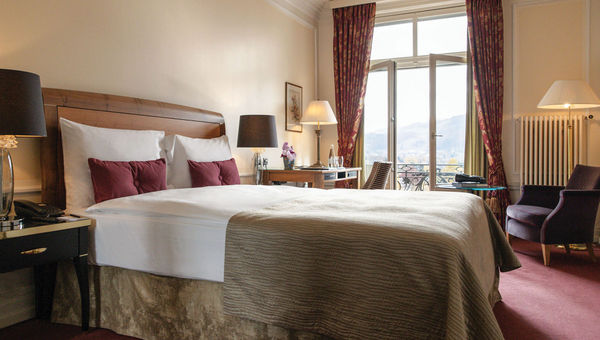
A suite with view. Photo Credit: Gregoire Gardette/Bellevue Palace Bern
Lasting first impression
The Bellevue Palace was never home to royals. Nor was it a stop on the Grand Tours of Europe, popular in the 17th to the 19th centuries. No matter. The Bellevue exudes an air of grandeur from the moment you walk up the red-carpeted steps.
Inside, an arched, stained-glass ceiling floods the lobby and interior courtyard with light, evoking the elegant belle epoque era. Fragrant, fresh flowers spill out of vintage vases. Comfortable upholstered chairs invite guests to relax and order a cocktail.
The lobby Gin Bar, stocked with 99 different brands, adds to the atmosphere of luxury and indulgence.
Buehrer, who makes a point of greeting guests, took me on a tour of the hotel's 11 elegant ballrooms lit with crystal chandeliers. Political soirees and exclusive weddings fill the rooms, depending on the season.
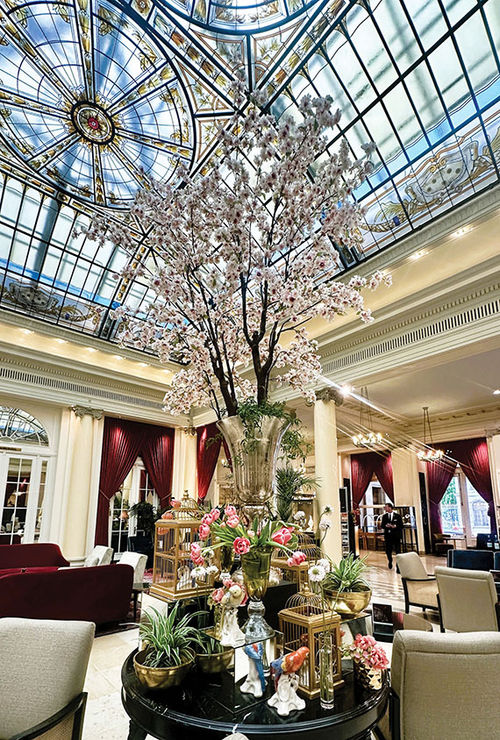
The stained-glass ceiling in the Bellevue Palace lobby is evocative of the belle epoque era. Photo Credit: Barbara Redding
Brasserie Vue, the Bellevue's French restaurant, reminded me of a study in a royal palace. Built-in bookcases house leather-bound tomes and bottles of expensive wines. Floor-to-ceiling doors open onto a spacious patio, where locals and visitors gather on warm evenings to take in river and mountain views.
At Buehrer's recommendation, my partner and I ordered the sea bass dinner for two, a whole fish baked in salt with a pastry crust. Our waiter put on a theater-worthy performance, expertly revealing the tender fish at the table. Lemon butter sauce accompanied the dish, which was paired perfectly with a Swiss riesling.
Wide, carpeted hallways hung with Old World paintings lead to spacious rooms and 25 suites, each featuring parquet floors, fine furnishings and marble bathrooms with soaking tubs. A spacious walk-in closet in my bedroom seemed like a leftover from the days when guests arrived with steamer trunks.
The Bellevue Bar, the oldest American bar in Switzerland, may be the most intriguing place in the hotel -- and all of Bern, for that matter. Axis and Allied spies frequented the wood-paneled bar during World War II and the Cold War. Buehrer pointed to a dark corner preferred by spy novelist John le Carre.
Le Carre, whose given name was David Cornwell, studied at the University of Bern before joining the U.K.'s secret service MI6. As le Carre, he wove Bern and the Bellevue into his books.
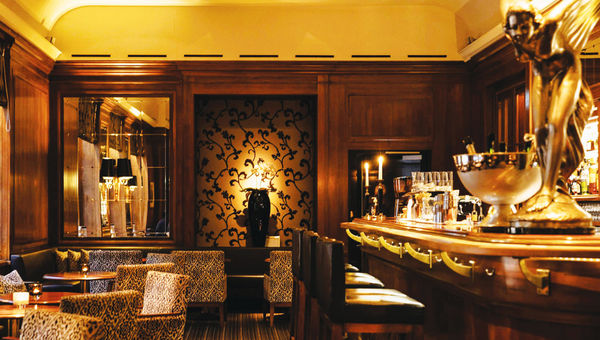
The hotel's Bellevue Bar, a place of political intrigue during World War II and the Cold War. Photo Credit: Maud Devaud/Bellevue Palace Bern
Origin story
The hotel's history predates the spy days. In 1848, when Bern was chosen as the capital of the Swiss Confederation, local hotelier Friedrich Osswald purchased the property adjacent to the new government offices.
Rebuilt after the hoteliers' sons took over, the Bellevue reopened in 1913 with its stunning interior, which reportedly drew gasps from guests. The hotel resumed its status as the official guesthouse of the Swiss government, attracting royals and heads of state, including Queen Elizabeth II, Mikhail Gorbachev and Nelson Mandela.
In the 1970s, the Swiss National Bank took over the hotel, reportedly to stop the Russians from purchasing it for their embassy. Now owned by the Swiss Confederation, the Bellevue is managed by the Michel Reybier Hospitality Group.
The hotel is within walking distance, or a short tram ride, of most city attractions. (Bern is small for a European capital, with just over 130,000 residents.)
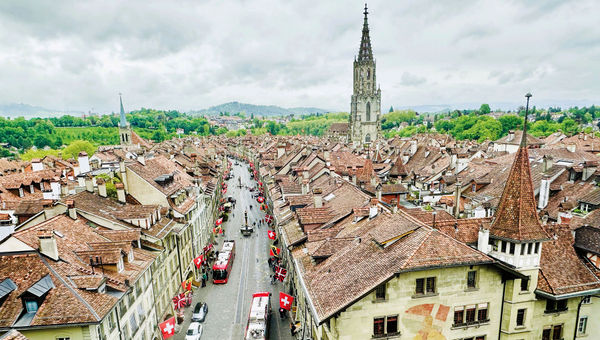
Rooftops of Bern seen from the clock tower. At 130,000 residents, the city is relatively small for a European capital. Photo Credit: Barbara Redding
Exploring the city
Though visitors often bypass Bern to hike the Swiss Alps and sail its glacier lakes, I found plenty to see and do in the German-speaking city. The Old Town, a Unesco World Heritage Site, perches on a peninsula contained within a sharp bend in the River Aare. Cobblestone streets lined with sandstone buildings house small boutiques and cafes, shaded by miles arcades.
Bern boasts an appealing mix of art and history museums, an ancient clock that's been ticking since 1530 and dozens of ornate water fountains where you can safely and conveniently refill your water bottle.
My favorite attractions included the Einstein Museum, which reveals the person behind the genius who changed the world with his contributions to physics. In fact, Einstein developed the Theory of Relativity while living in a humble Old Town apartment, now a museum.
The Paul Klee Center, which celebrated its 20th anniversary in 2025, showcases a comprehensive collection of the Swiss-German artist's eclectic work in a wave-like complex that's also considered a work of art.
If the weather had been warmer, I might have joined in a popular Bern tradition: floating around the city in the clear water of the River Aare. Instead, I observed the river through the binoculars in my Bellevue suite.