Independent hoteliers are flocking to hotel networks like Small Luxury Hotels of the World (SLH), Preferred Hotels & Resorts and Leading Hotels of the World, which are attracting hotel operators who want the perks that come with a more traditional brand affiliation, minus high costs and stringent brand requirements.
In mid-October, SLH reported it had added 44 boutique member properties to its fold so far this year -- a number that its vice president for the Americas, Kenan Simmons, said puts the company "a bit ahead of pace of what we do in a normal year."
Additions to the 550-property network include the 12-room Arctic Bath Hotel in Harads, Sweden, and the 36-room Hotel Castello di Reschio in Lisciano Niccone, Italy. The group also recently added its first "water-based member," Ecuadorian luxury cruise operator Kontiki Expeditions.
"If I look at SLH's costs versus the cost of branding a hotel, obviously, we're a lot cheaper," Simmons said. "We offer an option for hotels to reach a wider audience, but we're a much more cost-effective solution than the brand level."
According to Simmons, SLH is unique among its peers in that it also offers member properties access to a big-brand loyalty program. In late 2018, SLH forged a loyalty alliance with Hyatt Hotels, which granted Hyatt customers the ability to earn and redeem points at select SLH properties.
"The Hyatt marketing partnership has certainly broadened our reach, not only in terms of customers but in terms of eyes on our hotels, because now our hotels that participate in the marketing program are seen on Hyatt.com," he said. "It's been a big opportunity for us."

The Arctic Bath Hotel in Harads, Sweden, is joining the Small Luxury Hotels of the World network.
Preferred has similarly added approximately 45 members to its 750-plus-member roster this year, and, despite some pandemic-related churn, 2020 has been a relatively "strong year" for the group, said its executive vice president, Jonathan Newbury.
Among Preferred's most recent newcomers are the 149-room Pendry West Hollywood in California, which is slated to debut this winter, and the soon-to-open, 181-room Wall Street Hotel in New York.
"There were quite a few hotels that were in construction or various pre-opening phases prior to the pandemic, and we're seeing a lot of those properties now realize that they're going to need a lot of help to open," said Newbury.
To better meet such demand, Preferred is promoting an accessibly priced pre-opening services package, offering hotels in the construction and ramp-up phases access to Preferred's global sales, marketing and distribution support ahead of opening at a price point described as "a couple thousand a month."
Likewise, Preferred is in conversations with hotels looking to transition from competing networks as well as a few franchised properties, both soft- and hard-branded. The vast majority of properties expressing interest in membership, however, are independent, according to Newbury.
"Whether a hard or soft brand, a franchised hotel is usually in a 10- to 15-year contract, so it's much more difficult for them [to switch]," he said.
By comparison, Preferred generally looks to ink five-year agreements with member properties. More recently, however, the group has offered new members an option to lower their payments by signing longer contracts, creating a longer amortization period.
Like Small Luxury Hotels and Preferred, other networks are growing their ranks.
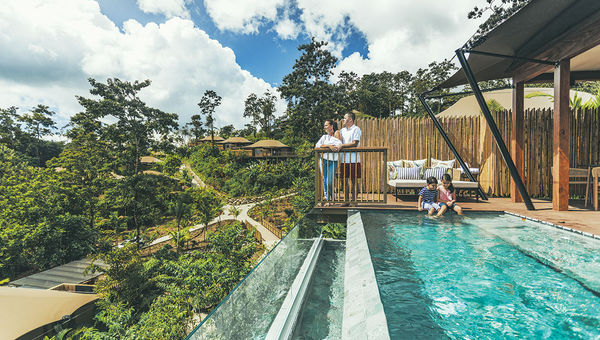
Leading Hotels of the World added Costa Rica’s Nayara Tented Camp to its network.
In early October, Leading Hotels of the World, which has around 400 members, added a dozen hotels to its stable, including notable new properties like the Nobu Hotel Chicago, Capella Bangkok and Costa Rica's Nayara Tented Camp.
In total, Leading Hotels of the World expects to add around 20 to 30 new members this year.
In August, luxury-focused network Relais & Chateaux welcomed seven members to its portfolio of more than 580 hotels and restaurants.
Like hotel networks, some soft brands are reporting an uptick in new members.
Design Hotels, a roughly 300-property brand that's part of the Marriott International portfolio, has recently added several new properties to its collection, including the Stanton House hotel in El Paso, Texas. According to Markus Schreyer, Design Hotels' senior vice president for the Americas and business innovation, "more people are knocking on our door" in the wake of the pandemic.
According to Preferred's Newbury, however, hotel networks have a leg up on their soft brand counterparts, particularly in a challenging environment.
"It's been believed for a long time that in bad times you really need a brand to perform, but that's not really true," said Newbury, citing data from a white paper released by Preferred in mid-October.
The report, featuring data from STR, indicates that between March 7 and Aug. 8, independent hotels in the U.S. outperformed both hard brands and soft brands on the occupancy front, with independents averaging an occupancy of 35.6% throughout the five months versus just under 30% occupancy for hard brands and 25.9% for soft brands.
In terms of RevPAR, independent hotels were also ahead, averaging RevPAR of $48.23 in the U.S. over the same period, compared with $33.18 and $34.24 for hard and soft franchised brands, respectively.
"Independents are perceived as being outside the norm, even though there are nearly as many independent hotels in the U.S. as franchised ones, and globally speaking, there are more independents than franchised hotels," said Newbury. "And the franchised hotels actually haven't been performing as well."