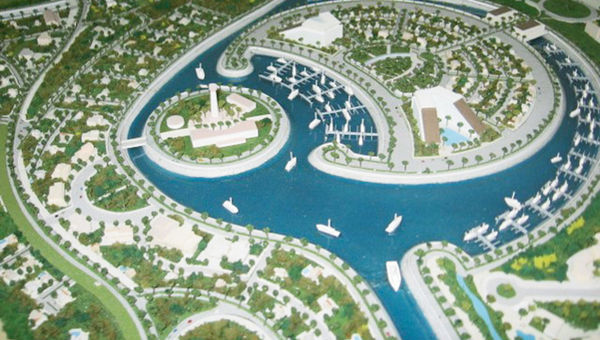
The first stage of Playa Espiritu is slated to open by the end of 2018.
A massive Mazatlan-area resort project that has been in
the works since 2008 has been guaranteed funding from the Mexican government
through at least 2018, as the country looks to capitalize on recent tourism
momentum to create what Mazatlan’s tourism minister is labeling “the new
Cancun.”
Playa Espiritu, which is being developed on about nine
square miles of coastal land some 50 miles south of Mazatlan, is slated to have
100 hotels totaling 44,000 rooms — more than all of Cancun, which has 32,000
units — and will feature more than seven miles of beachfront, retail and
entertainment centers; a golf course; a convention center; and a nature
preserve.
About a quarter of the almost $1 billion earmarked for
the project has already been committed. The first phase, totaling 10,000 rooms,
is slated to open by the end of 2018. No hotel brands for the project have been
announced.
“It is likely the area will become its own Riviera and
that Playa Espiritu visitors will definitely tour Mazatlan,” tourism minister
Rafael Lizarraga said. “It is an easy one-hour drive on the highway that
connects the two destinations.”
The project reflects the Mexican government’s confidence
in both the resurgence of international tourism visits and the willingness of
more travelers to explore Mexico’s Pacific Coast as a resort destination.
Largely as a result of the strengthening U.S. dollar,
weakened peso and decline in headlines about crime, Mexico climbed back in 2014
into the United Nation World Tourism Organization’s top 10 internationally
visited countries. Visits jumped 20%, to 29.1 million.
Last year, Mexico’s international visits edged up to 32
million, while U.S.-to-Mexico visits have surged by about 35% during the past
two years.
Both resort areas of Mazatlan and Cancun have benefitted.
Mazatlan visitation jumped 24% last year, to 2.2 million visitors, largely as a
result of increased airlift from the U.S. and Canada.
About $1 billion is being invested in Mazatlan’s Golden
Zone tourism area in the form of improved roads, sidewalks and signage. A
resurgence in cruise visits has also helped, as Mazatlan welcomed almost
200,000 cruise passengers last year, more than double the number of cruise
visitors in 2014.
Cancun attracted a record 5 million visitors last year,
while hotel occupancy reached a record 82%, according to the Cancun Convention
& Visitors Bureau.
The Cancun comparison is instructive because it
represents a precedent of sorts for Playa Espiritu.
Unlike destinations such as Acapulco and Puerto Vallarta,
which have a history dating back centuries, Cancun and its infrastructure was
first developed by the Mexican government in the 1970s, sparking widespread
private investment.
Ixtapa, which is located about 600 miles southeast of
Mazatlan on Mexico’s West Coast, was also born out of Mexican government
financing in the 1970s.
Lizarraga said he expects the breakdown of visitors to
Playa Espiritu to be about 60% U.S. and Canadian and about 40% Mexican, which
would be a reversal of the Mazatlan visitor demographic.
But as for history repeating itself, projecting Playa
Espiritu as “the new Cancun” may be premature, said Zachary Rabinor, CEO of the
travel agency Journey Mexico. That’s because the beaches on Mexico’s Pacific
Coast don’t have the reputation for sand quality and water clarity that
Caribbean resorts such as Cancun do.
“Cancun is blessed with flights from Europe, U.K., Russia
and beyond,” he said. “Mexico’s Pacific Coast doesn’t enjoy this type of
connectivity.”
Still, he said Mexico has come a long way from the “dark
years” of 2009 to 2013 and that all current and planned tourist areas might
well benefit from Mexico’s growing image as a “safe and secure” global
destination, especially amid terrorism concerns in Europe, health-related
issues in Africa and political instability in the Middle East.
He estimated that Journey Mexico’s revenue this year was
up 23% over last year and that forward bookings through the end of the year
have surged 71%.
“Compounding this trend is the relatively more dangerous
nature of the rest of the world,” he said.
___
Meagan Drillinger contributed to this report.